Property Taxes in South Edmonton: How the Bill Is Worked Out

This article walks through how the bill is built, when it arrives, what to do if you disagree with an assessment, and what is different for a newly built south home. Everything here comes from the City's own pages, read on 28 October 2026. The City sets new rates and dates every year, so use the figures on your own notice, not on this page.
The short answer
An Edmonton tax bill has two parts: a municipal portion and a provincial education portion that the City collects for Alberta. Both are worked out by applying a rate to your property's assessed value, the City's estimate of its market value. Notices come early in the year, the bill in May, and payment was due June 30 in 2026.
Key Takeaways
- The bill has two main parts: municipal taxes, set by the City, and education taxes, set by the Government of Alberta and collected by the City. It can also include local improvement charges.
- Both parts start from the assessed value of the property, which is an estimate of market value on a fixed date, not the price you pay or the asking price.
- In the City's 2026 timeline, assessment notices went out in January, the complaint deadline fell in March, tax notices went out in May and payment was due on June 30.
- You can file a formal complaint about an assessment, but not about the tax bill itself, and the deadline is printed on the notice.
- A newly built home can get a supplementary assessment for the value that new construction added during the year.
How Is an Edmonton Property Tax Bill Worked Out?
Each part of the bill is a rate multiplied by your property's assessed value. The City explains it as two short formulas, one for each part.
| Part | Who sets it | How the rate is found | What you pay |
|---|---|---|---|
| Municipal tax | The City | The City budget divided by the total assessed value of all properties | Your assessed value multiplied by the municipal rate |
| Education tax | The Government of Alberta | The province's education requisition divided by the total assessed value of all properties | Your assessed value multiplied by the education rate |
The City's tax breakdown page says municipal taxes account for approximately 70% of a total bill and education taxes for approximately 30%. Treat that as the City's rough split, not a promise for your address.
The budget and the total of all assessed values are city-wide, so the formula does not change by neighbourhood. What changes from one south street to the next is the assessed value, and with it the bill. The zone map shows the six south zones this site covers, but the formula has no zone in it.
What Is an Assessed Value, and Is It the Asking Price?
No. An assessed value is the City's estimate of what a property would fetch on the open market, set for a fixed date, and it is a separate number from a seller's asking price or the price in an offer. The City says it captures market conditions as of July 1, and the notice reflects that value for the previous July 1, adjusted for physical changes recorded by December 31.
The City lists what its assessors look at. Among them are the style and size of the home, the lot size, the year built, basement finish, garage, building condition, roof, special features and the neighbourhood. It also names location factors such as proximity to golf courses, lakes, parks, the river valley, commercial development and high-traffic routes.
When you are comparing homes, the listing search shows asking prices only. The assessed value of a specific address is on the City's MyProperty site, and the City's assessment maps show assessed values across the city.
Why Can One Home's Tax Change by More than Its Neighbour's?
Because the City compares your assessed value change with the average. If your property's assessed value changed by about the city-wide average, expect a tax change near the average municipal increase. If it changed by more, your increase will be greater than the average, and if by less, smaller.
The education part follows the same principle. The province decides how much it needs from property taxes, bills each municipality for its share, and the City turns that into a rate. All owners pay it, including those without children in school and senior residents, according to the City.
The City's page adds that, according to the Government of Alberta, education taxes support public and separate school students from kindergarten to grade 12, and the money is pooled and distributed to school boards on an equal per-student basis.
The City offers a Property Tax Estimator that shows what a property of a certain value is estimated to pay in taxes that year. Put in the home's assessed value from MyProperty, not its asking price, or the estimate will point the wrong way.
When Are Property Taxes Billed and Due, and What Happens If You Are Late?
In the City's 2026 timeline, tax notices were mailed in May and the deadline to pay was June 30.
| When (2026) | What happens |
|---|---|
| January 12 | Assessment notices mailed to all owners |
| January 12 to March 23 | Assessment review period |
| March 23 | Deadline to file a formal assessment complaint |
| March and April | Government of Alberta sets its education funding |
| May | Property tax notices mailed |
| June 30 | Deadline to pay property taxes |
If you do not pay in full by the deadline and are not on the City's monthly plan, the City's penalties page says an additional 5% is applied to the outstanding balance of the current year's taxes on each of July 1, September 1 and November 1, which it describes as a total annual rate of 15%. The penalties page has the detail.
The alternative is the Property Tax Monthly Payment Plan, which splits the bill into monthly withdrawals. The City says that for the first six months of the year the instalment is based on one twelfth of the previous year's tax, then adjusted for the last six.
Joining after January 1 means paying the instalments you missed plus a 2% service fee on them. The page also says that applying before December 15 lets you join for January 1 without that fee.
How Do You Dispute an Assessment, and by When?
You file a formal complaint with the Assessment Review Board by the deadline printed on your latest assessment notice. You can complain about an assessed value, but not about the tax bill itself.
Start with a call before you file anything. The City says its assessment experts can answer most assessment questions with no formal complaint fees, and that you should have your notice, account number and assessment group information in front of you. Call 311, or 780-442-5311 from outside Edmonton. In 2026 the review period ran from January 12 to March 23.
If the City or an owner finds an error, omission or incorrect description on a notice, the City may issue an amended assessment notice, and owners have 60 days from the mailing to review it, according to the City.
What Should a South Buyer Check About Taxes Before Offering?
Check the property's own record rather than the neighbourhood's reputation. The City gives you three things worth knowing about, and they matter most for newer areas.
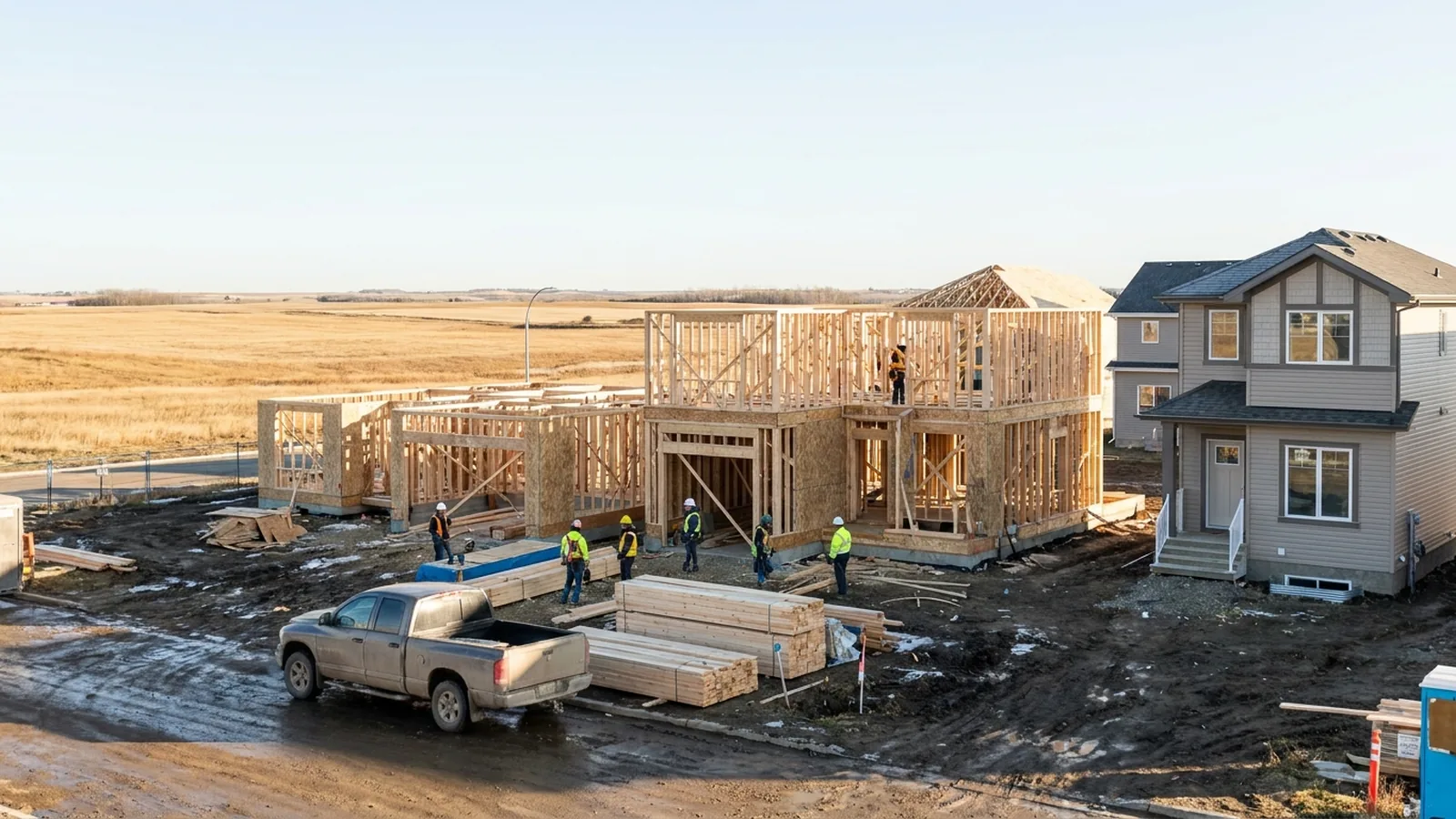
- Supplementary assessments on new construction. The City says that if a home was only partly complete at December 31, its notice reflects the land plus the building in proportion to completion, and a supplementary assessment and tax notice follow for the value of new construction completed during the year. That notice shows the number of supplementary months. Ask a builder how it will be handled on your possession date. The article on new build or resale covers other costs that arrive after the offer, and the new construction homes page lists what is currently for sale.
- Local improvement charges. The City says about 25% of Edmonton property owners pay them, for things such as alley reconstruction or sidewalk work, and that they appear on the annual tax notice. Ask the seller or your lawyer whether the home carries any.
- How taxes are adjusted at possession. This is a matter for your lawyer. Ask how the current year's property taxes will be handled between you and the seller, and ask for the tax notice to be reviewed.
For a condo, read the corporation's documents as well, because they show what the corporation charges. The guide to south Edmonton condo documents lists what to read. For a sense of how asking prices differ by zone and home type, see asking prices by zone. The City's pages do not say that south homes are taxed differently from the rest of the city, and this article does not claim it.
What to Do Next
- Pick two or three addresses and look up each one's assessment and tax data on the City's MyProperty site.
- Run the assessed value through the City's Property Tax Estimator, and ask your lawyer how the current year's tax will be adjusted on possession.
- For a new or unfinished home, ask the builder about supplementary notices, then ask Eddie for help reading the listing and the paperwork.

Eddie Gebran
Eddie is a lifelong Edmontonian and a REALTOR® with RE/MAX Elite. His background includes over 23 years in real estate, five of them in new home sales, and he works mostly with buyers and sellers in the city's south.
Call or text Eddie at 780-906-9959, or write to eddie@eddiegebran.com.
Last reviewed 3 November 2026. This is general information, not legal, tax, mortgage or financial advice. Rules, programs and prices change, so check the current details with the City, the school board, a lawyer or a mortgage professional before you commit. Market figures use asking prices on active MLS® listings, not sales.
Sources
- City of Edmonton, Assessment of Properties (read 28 October 2026)
- City of Edmonton, Property Tax Breakdown (read 28 October 2026)
- City of Edmonton, Penalties and Service Charges (read 28 October 2026)
- City of Edmonton, Property Tax Monthly Payment Plan (read 28 October 2026)
Your next step
Buying a Home and Unsure About the Extra Costs?
Eddie can walk you through what to ask the seller, the builder and your lawyer before you make an offer.
Talk to EddieCommon Questions
How is property tax calculated in Edmonton?
The City multiplies a property's assessed value by two rates: a municipal rate and an education rate. The municipal rate comes from the City budget divided by all assessed values, and the education rate from the province's requisition divided by the same total. Both parts appear on one bill.
Who sets the education portion of an Edmonton tax bill?
The Government of Alberta sets it, not the City. The province decides how much it needs from property taxes and bills each municipality for its share. The City works out a rate, collects the money from property owners and passes it on. The City says all owners pay it, whether or not they have children.
When are Edmonton property taxes due?
In the City's 2026 timeline, tax notices were mailed in May and payment was due June 30. Dates are set each year, so check the notice you receive. Owners on the Monthly Payment Plan pay by automatic withdrawal instead of one annual payment.
What is the deadline to complain about my property assessment?
It is printed on your assessment notice. In 2026 the City's review period ran from January 12 to March 23. You can file a formal complaint about the assessed value with the Assessment Review Board, but not about the tax bill itself. The City suggests calling 311 first, since its experts can answer most questions without a formal complaint.
Does a new home in south Edmonton have different taxes?
The City's pages do not say south homes are taxed differently. They do say that a home only partly finished at December 31 is assessed on its land and the part built, and that a supplementary notice follows for new construction completed during the year.