How Interest Rates Affect South Edmonton Home Buyers This Winter
Rates are back in the news. On 28 October 2026 the Bank of Canada raised its policy rate for the first time in more than three years, and a lot of buyers in south Edmonton are now asking the same thing: should they wait, or go ahead this winter?
Nobody can tell you where rates go next, and this article won't pretend to. What Eddie can show you is how a rate change reaches your payment, how it changes what you qualify for, and which dates to watch between now and spring.
The short answer
The Bank of Canada's policy rate is now 2.5%, up a quarter point on 28 October 2026. Higher rates raise payments and shrink how much you qualify for, since the stress test adds at least two points. The next decisions are 9 December and 27 January. Get pre-approved, and plan around a payment you can carry.
Key Takeaways
- The Bank of Canada raised its target for the overnight rate to 2.5% on 28 October 2026, citing the risk that high energy prices spread to other prices.
- On the example in this article, every quarter-point rise adds about $50 a month to the payment on a $372,000 mortgage.
- Lenders test you at a higher rate than you'll pay: the greater of your rate plus 2 points or 5.25%, under OSFI's rule for uninsured mortgages.
- The Bank's next two announcements fall on 9 December 2026 and 27 January 2027, right in the middle of winter house hunting.
- Waiting for a lower rate is a bet, not a plan. Decide on the payment you can live with first.
What Did the Bank of Canada Just Do?
The Bank raised its policy rate by 25 basis points, from 2.25% to 2.5%, on 28 October 2026. In its release it said consumer price inflation had been around 3% since April, driven by high oil prices, and that it expected inflation to rise to about 3½% by the end of the year. The increase was meant to stop those energy costs from spreading into the price of everything else.
The Bank also said there could be a need to raise the rate further, but that it would proceed carefully given the uncertainty. That is the Bank describing its options, not a promise either way. The same release said it expects housing to remain relatively weak, which fits what south Edmonton buyers are seeing in the listings. For the local read on supply, see is it a buyer's market in south Edmonton.
How Much Does a Rate Change Move a Monthly Payment?
More than most buyers expect. The table takes the median asking price across the six south zones this site uses, $465,000 as of 20 November 2026, assumes 20% down ($93,000) and a 25-year amortization, and works out the monthly payment at four example rates. They are round numbers for illustration, not rates any lender is offering today.
| Example rate | Monthly payment | Stress test rate | Payment you must qualify at |
|---|---|---|---|
| 4.00% | $1,960 | 6.00% | $2,380 |
| 4.50% | $2,060 | 6.50% | $2,490 |
| 5.00% | $2,160 | 7.00% | $2,610 |
| 5.50% | $2,270 | 7.50% | $2,720 |
At these sizes, each quarter point adds roughly $50 a month, or about $610 a year. A full point is closer to $210 a month. Your own figures will depend on the price, your down payment and the rate you're actually offered. Property tax, heat and any condo fee come on top; the guides to south Edmonton property taxes and condo fees help you fill those in.
Why the Stress Test Matters More than Your Rate
Lenders don't just check that you can afford your payment. They check that you could afford it at a higher rate. For an uninsured mortgage, usually one with 20% or more down, OSFI sets the minimum qualifying rate at the greater of your contract rate plus 2 points or 5.25%.
The right-hand column of the table shows what that means: you have to show the income to carry the larger payment, even though you'll actually pay the smaller one.
So a rate rise hits twice. It raises the payment you'll make, and it raises the payment you have to qualify at, which lowers the most a lender will approve. A buyer who was comfortably approved in the summer may find the same income stretches less far now. Check OSFI's page for the current rule before you shop.
One exception is worth knowing for later: OSFI says it does not expect lenders to apply the qualifying rate when an uninsured mortgage is switched to a new lender at renewal, with no change to the amount or amortization.
Fixed or Variable This Winter?
The Financial Consumer Agency of Canada puts the difference simply. A fixed rate stays the same for the whole term. A variable rate can rise and fall during the term, and it usually starts lower than a fixed rate of a similar length.
How a variable rate reaches you depends on the mortgage. With adjustable payments, your payment changes when the rate does. With fixed payments, the payment stays level and more of it goes to interest when rates rise. The agency warns that in some cases none of the payment goes to principal at all, so ask your lender how its variable mortgage handles a rise.
After a rate increase, the choice comes down to how much movement your budget can absorb. If one more quarter point would make the payment hard to carry, a fixed rate buys certainty for the term. If you have room, a variable rate may cost less, but you're accepting the risk the Bank itself has flagged.
Can a Longer Amortization or a Smaller Down Payment Help?
A longer amortization lowers the payment, but it costs more in the end. With less than 20% down, the Financial Consumer Agency of Canada says the maximum is 30 years if you're a first-time buyer or buying a new build, and 25 years otherwise. With 20% or more down, your lender sets the limit.
On the same $372,000 loan at an example 4.50%, a 30-year amortization brings the payment from about $2,060 to about $1,880 a month. If the rate stayed there for the whole life of the loan, total interest would rise from about $246,000 to about $303,000. That is arithmetic on an example, and it leaves out mortgage insurance, which applies with less than 20% down.
Insured mortgages are only available up to a price limit. Finance Canada raised that cap from $1 million to $1.5 million on 15 December 2024. If you're buying new, read new build or resale and the GST new home rebate guide before you compare payments.
Should You Wait for Rates to Drop?
Only if waiting suits you for other reasons. The Bank has just raised its rate and said more may be needed, so nobody can promise a drop by spring. If you wait and rates rise again, your budget shrinks. If they fall, prices and competition may not hold still either.
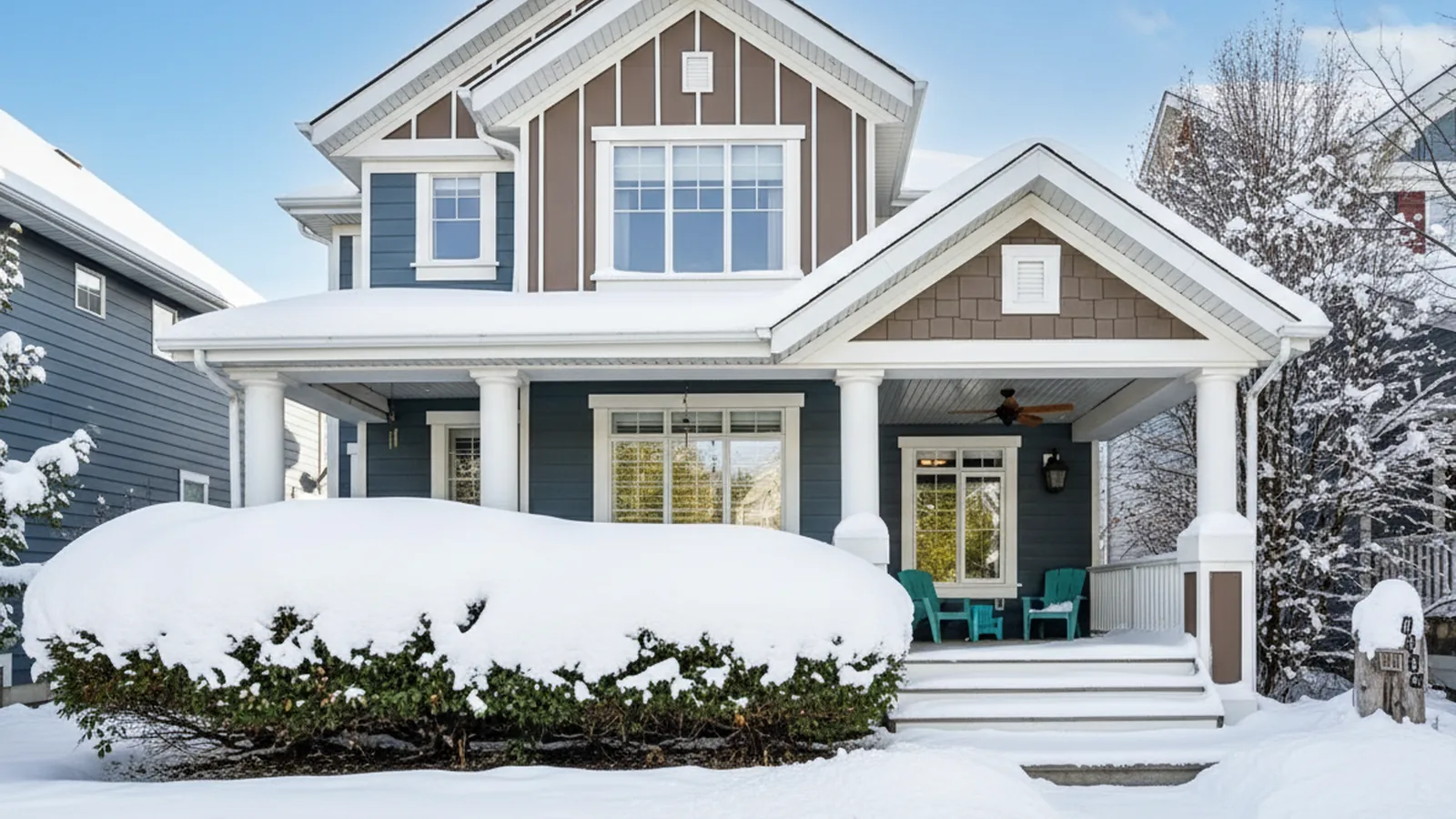
Buying in winter has one practical upside: you see a home at its hardest season, when the furnace, windows and driveway are all being tested. As of 20 November 2026, there were 1585 active listings across the six south zones, and the map search and homes under $500,000 pages show what is up right now. Eddie's guide to south Edmonton in winter covers what to check on a home in the cold months.
Ask your lender how long it will hold the rate on your pre-approval, and whether you get the lower rate if rates drop before you close. A rate hold can protect you through the 9 December and 27 January announcements.
What to Do Next
- Get pre-approved now, and ask your lender for the payment at your rate and at the stress test rate.
- Set the monthly payment you're comfortable with, including tax, heat and fees, and search to that number rather than the maximum approval.
- Talk to Eddie about the homes on your list. He'll help you line up a viewing and an offer around the dates that matter to you.

Eddie Gebran
Eddie is a lifelong Edmontonian and a REALTOR® with RE/MAX Elite. His background includes over 23 years in real estate, five of them in new home sales, and he works mostly with buyers and sellers in the city's south.
Call or text Eddie at 780-906-9959, or write to eddie@eddiegebran.com.
Last reviewed 18 November 2026. This is general information, not legal, tax, mortgage or financial advice. Rules, programs and prices change, so check the current details with the City, the school board, a lawyer or a mortgage professional before you commit. Market figures use asking prices on active MLS® listings, not sales.
Sources
- Bank of Canada, "Bank of Canada raises the policy rate by 25 basis points to 2½%", 28 October 2026
- Bank of Canada, Policy interest rate and schedule of announcements
- Office of the Superintendent of Financial Institutions (OSFI), Minimum qualifying rate for uninsured mortgages
- Financial Consumer Agency of Canada, Mortgage terms and amortization
- Financial Consumer Agency of Canada, Choosing a mortgage that's right for you
- Department of Finance Canada, mortgage reforms announced September 2024 (insured mortgage price cap and 30-year amortizations)
Your next step
Planning a Winter Purchase?
Eddie will help you line up the homes that fit your budget and time your offer around the dates that matter.
Talk to EddieCommon Questions
What is the Bank of Canada's interest rate right now?
The Bank of Canada raised its target for the overnight rate by a quarter point to 2.5% on 28 October 2026. It was the first increase since July 2023. Check the Bank's key interest rate page for the latest decision, since it can change at any scheduled announcement.
When is the next Bank of Canada rate announcement?
The Bank's schedule lists 9 December 2026, then 27 January 2027, which also brings a new Monetary Policy Report. After that come 3 March and 28 April 2027. If you are close to buying, ask your lender how a decision on those dates could affect the rate you have been offered.
How does the mortgage stress test work?
For an uninsured mortgage, OSFI sets the minimum qualifying rate at the greater of your contract rate plus 2 percentage points or 5.25%. The lender checks that you could afford the payment at that rate, even though you pay your actual rate. A higher contract rate therefore lowers the most you can borrow.
Will mortgage rates go down this winter?
Nobody can say for certain. In its October 2026 release the Bank of Canada said it could need to raise its rate further but would proceed carefully. Plan around a payment you can carry at today's rate, ask about a rate hold on your pre-approval, and treat any drop as a bonus rather than the plan.
Can I get a 30-year mortgage in Alberta?
Yes, in some cases. With less than 20% down, the Financial Consumer Agency of Canada says the maximum amortization is 30 years for first-time buyers or new builds and 25 years otherwise. With 20% or more down, the lender sets the limit. A longer amortization lowers the payment but adds interest over time.