South Edmonton in Winter: What Homeowners Deal with, from Snow to Garages and Ice
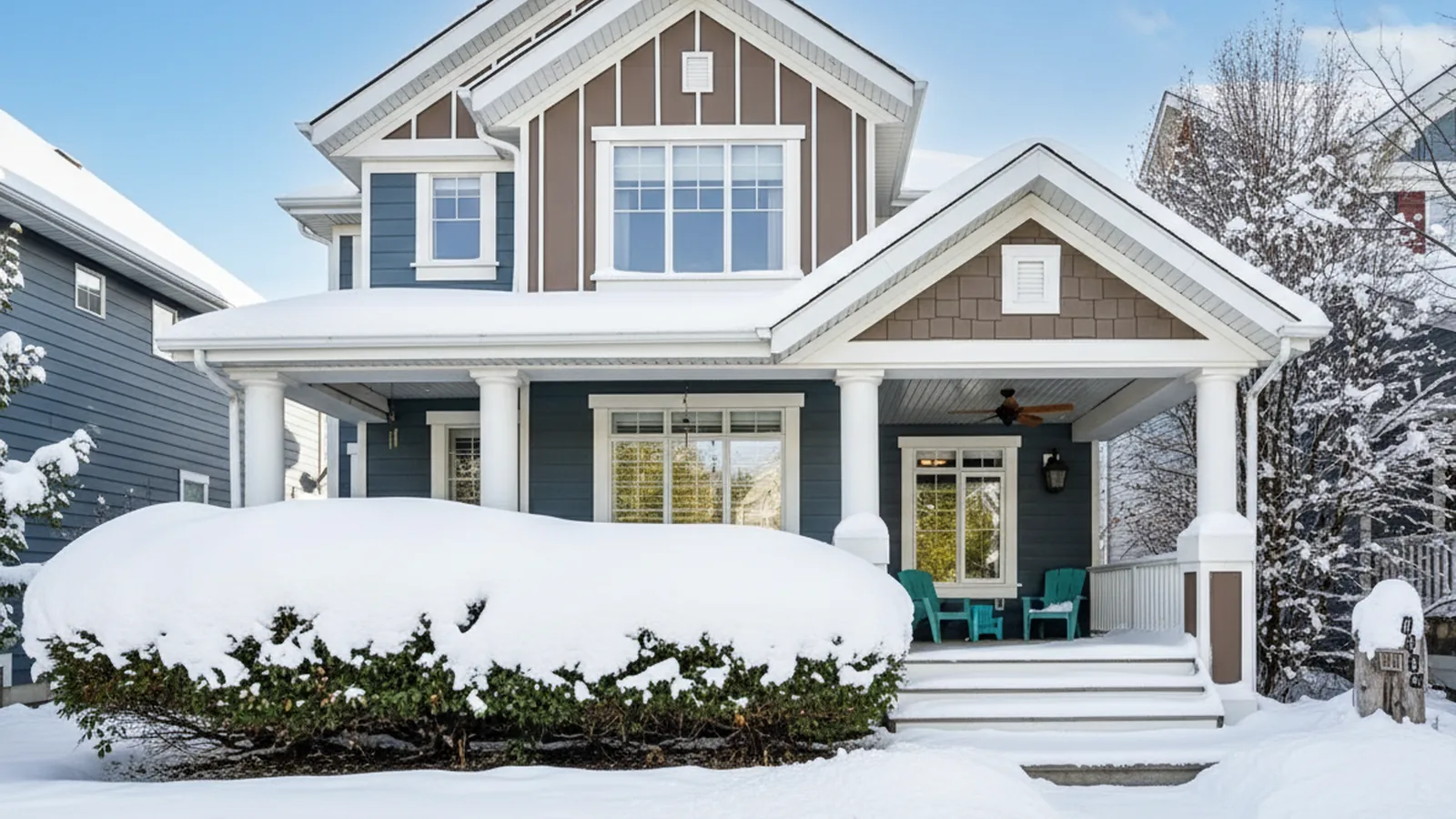
Much of what winter asks of a south Edmonton homeowner is set by City rules: who shovels the sidewalk, when the plow comes, where you can park during a ban. The house decides the rest, through its garage, driveway and drainage. This guide covers both, so a buyer knows what they are signing up for.
The short answer
Owners must keep the sidewalk beside their property clear of snow and ice, with no set grace period. The City blades residential streets to about 5 cm of snowpack during Residential (Phase 2) parking bans, leaves most windrows in place and clears cul-de-sacs separately. Your garage, driveway and downspouts decide how much ice you fight.
Key Takeaways
- The Community Standards Bylaw requires you to keep the sidewalk next to your property clear of all snow and ice. Not doing it can mean a $100 fine plus the cost of the City's contractor.
- Pushing snow from your walk or driveway onto the road breaks City bylaws and carries a $250 fine.
- Residential streets are a Priority 4 service level: bladed to about 5 cm of snowpack, with each neighbourhood affected for around 72 hours of a ban that can run up to 14 days.
- The City does not remove windrows on standard residential streets, but it will open a driveway fully blocked by a windrow over 30 cm.
- Owning detached means the shovel is yours. In a condo or townhouse complex, the corporation's contract and budget usually decide it, so read the documents.
Who Has to Clear the Sidewalk in Front of a House in Edmonton?
The owner or occupant does. The City's sidewalk snow and ice page quotes Community Standards Bylaw 14600: a person must keep any sidewalk next to land they own or occupy clear of all snow and ice.
The bylaw does not set a number of hours. The City asks for removal as quickly as possible, and its standard is snow and ice cleared to the concrete or asphalt for the full width and length of the walk.
If the walk is not cleared, the City can issue a $100 ticket and send a contractor, and the cost of that work goes on the property's tax roll. For a condo, the City's page says the charge is split equally among the legal owners on the tax roll, and that questions about condo fees go to the condo association.
The City clears sidewalks around public schools, bus stops and City buildings, but says it does not have the resources to clear most residential sidewalks. Canada Post clears the area right in front of community mailboxes.
Snow from your walk or driveway cannot go on the road or boulevard; that is a $250 fine. With no room on your lot, you can haul it free to a City snow storage facility; one south side site is at 156 Street and Ellerslie Road, so check whether it is open first.
When Does the City Plow Residential Streets?
Residential streets come last in the City's order. On the City's snow clearing service levels page, local residential roads are Priority 4: kept to a 5 cm snowpack, with the work finished within 14 days once a residential blading cycle starts. They are not cleared to bare pavement. The residential snow clearing page says that base is kept on purpose, to limit windrow size and help prevent flooding during melts.
That work happens during a parking ban. According to the City's parking ban page:
- At least 8 hours' notice is given before any ban is enforced, and not every snowfall leads to one.
- A Major Roadways (Phase 1) ban covers arterial and collector roads and bus routes, including those through residential neighbourhoods. White "seasonal no parking" signs mark them.
- A Residential (Phase 2) ban can last up to 14 days citywide, but each neighbourhood is affected for around 72 hours. Yellow "No Parking" signs go up at neighbourhood entrances at least 24 hours before clearing.
- During a Phase 2 ban you can park in your driveway or on roads already cleared in Phase 1 where parking is normally allowed. Alley parking is prohibited, and parking on a lawn or front yard is not allowed.
- A vehicle left on a road under a ban may get a $250 fine.
What Happens with Windrows, Cul-De-Sacs and Back Lanes?
A windrow is the ridge of snow a plow leaves along the curb, and on standard residential streets the City leaves it there. If one is over 30 cm high and fully blocks a residential driveway, smaller equipment will open the entrance to 1.5 car widths, typically within 24 hours. Crews will also clear spillover that blocks a sidewalk or reaches more than 0.5 metres onto it; report it through 311.
Cul-de-sacs are a separate operation. The City clears them to bare pavement, on average once or twice a year, after large storms or when conditions call for it. A full cycle of about 3,000 cul-de-sacs takes 4 to 6 weeks, with "No Parking" signs posted 24 hours ahead. On a crescent or bay, expect a wait between clearings.
Back lanes are cleared to keep access for emergency vehicles and waste collection, and the City does that after the nearby roads are done. If a home's garage opens onto a lane, that order matters more than it seems in July.
How Does the Home Type Change Your Winter Chores?
The biggest difference is who holds the shovel. With a detached home, the walk, driveway and any lane access are yours to keep clear. In a condo or townhouse complex, snow clearing of shared areas is usually a corporation expense, so check the budget, the contract and the bylaws for who clears what. The guide to condo documents to read before you remove conditions covers where to find them.
As of 20 November 2026, 53% of the 1585 active listings across the six south zones were detached homes. The mix varies by zone:
| Zone | Active listings | Detached | Townhouse | Condo | Other styles | Median year built |
|---|---|---|---|---|---|---|
| 14 · Riverbend & Terwillegar | 177 | 67 | 33 | 69 | 8 | 2007 |
| 16 · Blue Quill, Twin Brooks & Duggan | 154 | 75 | 31 | 46 | 2 | 1979 |
| 53 · Summerside & Ellerslie | 337 | 180 | 69 | 44 | 44 | 2015 |
| 55 · Heritage Valley | 399 | 172 | 79 | 83 | 65 | 2017 |
| 56 · Windermere & Glenridding | 287 | 146 | 45 | 80 | 16 | 2017 |
| 57 · Edgemont & The Uplands | 231 | 193 | 19 | 0 | 19 | 2026* |
| All six zones | 1585 | 833 | 276 | 322 | 154 | 2016 |
* Zone 57's median year built reads as 2026 because most of its listings are homes not finished yet. The oldest housing by median year built is in zone 16 (Blue Quill, Twin Brooks & Duggan).
Older driveways and walks have seen more freeze and thaw, while a new build's grading may still be settling; the new build or resale comparison covers both. Browse detached homes, townhouses or south condo buildings, or see the zone map.
What Should You Check on the Garage, Driveway and Drainage?
Ice is mostly a drainage problem. The City's sidewalk page says to pile snow where meltwater will not run across your sidewalk and to aim downspouts away from it. On a showing, look at:
- Downspouts and extensions. Does roof water land on the driveway, the front walk or the public sidewalk?
- Driveway slope and shade. A driveway that slopes toward the garage, or sits in shadow most of the day, tends to hold ice longer.
- Garage access. A detached garage off a lane depends on lane clearing, which comes after the streets.
- Garage condition. Ask whether it is insulated or heated, check door seals and the slab, and have the inspector check the roof and attic for past ice build-up.
- Room to pile snow. Corner lots have more walk to clear, and the snow cannot go on the road.
Free sand is available at City roadway maintenance yards and participating community leagues; bring your own container.
How Does Waste Collection Work in Winter?
The City's curbside collection page says winter collection starts on November 3, with food scraps picked up every 2 weeks. Carts go on level ground, not on a sidewalk or a raised platform, with 1 metre of clearance around each and 1.5 metres from fire hydrants, so keep that spot shovelled. Report a missed pickup through the WasteWise app or 311.
For neighbours who need help shovelling, the City points seniors to Hello Seniors (the Edmonton Seniors Coordinating Council) for referrals, and runs a Snow Angels program.
What to Do Next
- Sign up for the City's Service Notifications for your address, so parking ban alerts reach you before the plows do.
- If you are buying, ask the seller how the driveway, walks and garage handle a thaw, and for a condo or townhouse, ask for the snow clearing contract and budget line.
- Talk to Eddie about homes in your zone, and he will point out what to look at on a winter showing. The commuting guide covers the roads you will drive once the snow comes.

Eddie Gebran
Eddie is a lifelong Edmontonian and a REALTOR® with RE/MAX Elite. His background includes over 23 years in real estate, five of them in new home sales, and he works mostly with buyers and sellers in the city's south.
Call or text Eddie at 780-906-9959, or write to eddie@eddiegebran.com.
Last reviewed 3 November 2026. This is general information, not legal, tax, mortgage or financial advice. Rules, programs and prices change, so check the current details with the City, the school board, a lawyer or a mortgage professional before you commit. Market figures use asking prices on active MLS® listings, not sales.
Sources
Your next step
Buying Before or During Winter?
Eddie can show you what to look for on a winter showing, from the driveway and garage to how a street gets cleared.
Talk to EddieCommon Questions
How long do I have to shovel my sidewalk in Edmonton?
The Community Standards Bylaw does not set a number of hours. It says you must keep the sidewalk next to land you own or occupy clear of all snow and ice, and the City asks for that as quickly as possible. If it is not done, you can get a $100 ticket plus the cost of the City's contractor.
Will the City clear the windrow across my driveway?
Usually not. The City leaves windrows on standard residential streets and tries to keep them low at driveways. If a windrow is over 30 cm high and fully blocks a residential driveway, the City says smaller equipment will open it to 1.5 car widths, typically within 24 hours. Report it through 311.
Where can I park during a residential parking ban?
During a Residential (Phase 2) ban, the City says you can park in your driveway or on roads already cleared in the Phase 1 ban where parking is normally allowed. Alley parking is prohibited and parking on lawns is not allowed. A vehicle left on a road under a ban may get a $250 fine.
Can I shovel snow from my driveway onto the street?
No. The City says placing snow from a walkway, sidewalk or driveway onto the road breaks municipal bylaws and carries a $250 fine, because it makes roads less safe and can block storm drains. If you have no room on your lot, you can haul snow to an approved City snow storage facility free of charge.
How often are cul-de-sacs cleared in Edmonton?
On average once or twice a year, after large storms or when conditions call for it. The City clears cul-de-sacs to bare pavement in a separate operation that follows residential roads, working 7am to 7pm with signs posted 24 hours ahead. A full cycle across about 3,000 cul-de-sacs takes 4 to 6 weeks.